IMEC vs. BRI: India's Strategic Economic Corridor to Europe
In an increasingly interconnected yet volatile world, economic corridors are not merely pathways for trade; they are arteries of geopolitical influence and strategic partnerships. Among the most ambitious of these is the India–Middle East–Europe Economic Corridor (IMEC), a monumental initiative poised to redefine global supply chains and profoundly impact the **india economy middle east** dynamic. Launched as a direct response and alternative to China's expansive Belt and Road Initiative (BRI), IMEC represents a forward-looking vision for enhanced connectivity and economic integration across three continents. This corridor isn't just about faster transit; it's about building resilient, diversified, and strategically aligned economic pathways, drawing inspiration from ancient trade routes like the Golden Road but leveraging 21st-century infrastructure.
A New Golden Road for Global Trade: Understanding IMEC
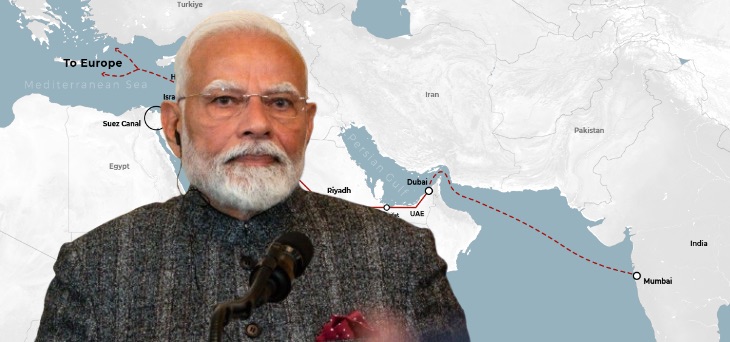
The India–Middle East–Europe Economic Corridor (IMEC), sometimes referred to as IMEEC, is a planned infrastructure project designed to bolster economic development by fostering connectivity and economic integration between Asia, the Persian Gulf, and Europe. Its proposed route charts an ambitious course: beginning in India, traversing the United Arab Emirates, Saudi Arabia, and Israel, before reaching Greece and onward into Europe. This multi-modal corridor combines both shipping and rail networks, aiming to significantly reduce transit times and costs compared to existing routes.
The vision for IMEC goes beyond mere logistics. It encompasses an intricate web of digital connectivity, energy pipelines, and enhanced communication links, fostering an environment ripe for economic collaboration and investment. Countries like India, with its rapidly growing economy and strategic ambitions, stand to gain immensely from direct, efficient access to European markets, bypassing traditional chokepoints. For nations in the Middle East, including the UAE and Saudi Arabia, IMEC offers a powerful tool for economic diversification, moving beyond hydrocarbon reliance towards becoming pivotal hubs in global trade and logistics. The establishment of the Indo-Mediterranean Initiative (IMI) in June 2024 further underscores the commitment to tracking and advancing IMEC's progress, signaling a sustained, concerted effort from its partners.
The launch of IMEC is inherently a geopolitical statement, directly positioning itself as a counterweight to China's multi-trillion-dollar Belt and Road Initiative. While BRI has funded infrastructure projects across dozens of countries, it has also drawn criticism for creating "debt traps" and serving China's strategic interests primarily. IMEC, in contrast, is envisioned as a more collaborative, transparent, and mutually beneficial enterprise, championed by democratic nations including the G7. For India, it’s a crucial step in asserting its role as a regional and global economic power, fostering stronger ties with key partners in the Middle East and Europe without the strings often associated with BRI investments.
One of IMEC's most compelling strategic advantages lies in its ability to offer a robust alternative to the Suez Canal – a vital, yet increasingly vulnerable, maritime chokepoint. Recent disruptions, including the Houthi blockade in the Red Sea and the ongoing Gaza conflict, have underscored the fragility of relying on a single, congested route for a significant portion of global trade. The IMEC route, by integrating rail and shipping, provides a mechanism to future-proof the India-Europe-US supply chain, ensuring resilience against geopolitical shocks and natural disasters. This strategic diversification not only enhances supply chain security but also offers a competitive edge by potentially reducing transit times by up to 40% and cutting logistics costs, making it a game-changer for businesses involved in **india economy middle east** trade and beyond.
Economic Promise for India and the Middle East
The economic potential of IMEC is vast and transformative, particularly for the **india economy middle east** relationship. For India, the corridor promises to unlock new avenues for export growth, investment, and technological collaboration. Reduced shipping times and costs will make Indian goods more competitive in European markets, boosting sectors from manufacturing and textiles to pharmaceuticals and IT services. This increased market access is critical for India's ambition to become a $5 trillion economy, fostering job creation and enhancing its overall economic influence. Indian businesses can look forward to a more streamlined and efficient supply chain, encouraging greater foreign direct investment and fostering industrial growth.
For the Middle Eastern nations involved – particularly the UAE and Saudi Arabia – IMEC aligns perfectly with their national visions for economic diversification and transformation. These countries are investing heavily in logistics, technology, and non-oil sectors, aiming to become global hubs for trade and innovation. The corridor provides a tangible framework for these ambitions, attracting investment in ports, railways, and associated infrastructure. For instance, Saudi Arabia’s Vision 2030 and the UAE’s strategic development plans will find significant synergies with IMEC, facilitating the growth of new industries, promoting tourism, and creating high-skilled jobs. Israel, another key node in the corridor, benefits from enhanced integration with regional economies, fostering opportunities for technological partnerships and trade. Furthermore, the corridor solidifies India's role as a major energy consumer and strategic partner, ensuring stable energy supplies while diversifying trade routes. This robust framework strengthens the collective vision for
IMEC: India's Vision for a New Golden Road to Europe.
Practical Tip for Businesses: Companies looking to leverage IMEC should begin conducting feasibility studies to understand potential cost savings, transit time reductions, and new market access opportunities. Engage with logistics providers specializing in the proposed corridor regions and explore potential partnerships with businesses in the UAE, Saudi Arabia, and Israel to establish early market presence and understanding.
Challenges and the Path Forward
Despite its immense promise, IMEC faces significant hurdles. The ongoing conflict in Gaza has undeniably cast a shadow over the project, leading to delays and raising questions about the stability of certain segments of the route, particularly through Israel. Geopolitical complexities in the broader Middle East region remain a persistent challenge, demanding sustained diplomatic efforts and a collective commitment from all participating nations. Securing consistent and substantial funding will also be critical, as such large-scale infrastructure projects require colossal investment and a long-term vision. Beyond initial funding, the synchronization of regulatory frameworks, customs procedures, and technical standards across multiple countries with diverse legal systems will require intricate planning and cooperation.
However, the enthusiasm for IMEC has experienced a notable resurgence. The project gained significant momentum during Indian Prime Minister Narendra Modi's visits and discussions with world leaders, indicating a strong political will behind its implementation. The "new lease of enthusiasm" stems from the clear strategic imperative to diversify global supply chains and build resilience against future disruptions. The formation of the Indo-Mediterranean Initiative (IMI) signifies a dedicated mechanism to monitor and push forward the project, demonstrating that despite the challenges, the long-term strategic and economic benefits outweigh the immediate obstacles. The continued commitment from major global powers, including the United States, reinforces the notion that IMEC is not just an infrastructure project but a cornerstone of a new economic and geopolitical alignment.
Conclusion
The India–Middle East–Europe Economic Corridor stands as a testament to the evolving dynamics of global trade and geopolitics. More than just a network of rails and shipping lanes, IMEC represents a powerful vision for a connected, resilient, and prosperous future, significantly impacting the **india economy middle east** relationship and beyond. By offering a strategic alternative to existing routes and rival initiatives, it aims to foster genuine economic integration, diversify supply chains, and bolster the economic sovereignty of its members. While challenges persist, the renewed commitment and strategic imperative behind IMEC suggest that this modern Golden Road is well on its way to reshaping the contours of global commerce and strategic cooperation for decades to come.